Read the team grid
Review the playing area and the rules of the team Tic Tac Toe format. How did the team communicate its next grid move?
Learning focusReading the grid
A familiar grid becomes a live team decision game. Participants must notice both their own plan and the move the opposing group has just made.
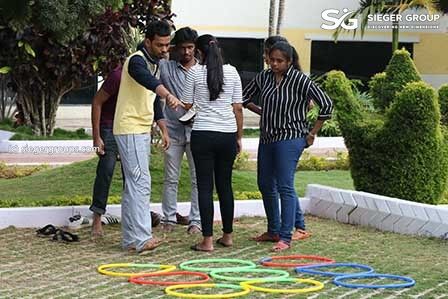
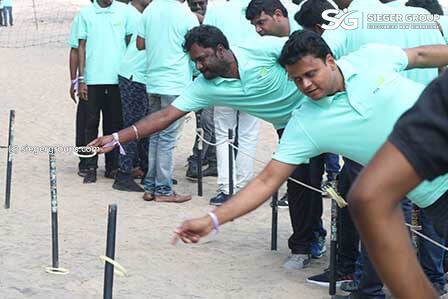
The familiar grid becomes a team game in which colleagues take turns placing markers. Teams have to pass on what changed between moves and spot the other side’s next option. A short round makes it easy to replay a decision while it is still fresh.
Replay one turning point and ask which piece of information changed the team’s choice.
See how the familiar board game becomes a moving team challenge. Watch how colleagues communicate a change of plan between turns.


Review the playing area and the rules of the team Tic Tac Toe format. How did the team communicate its next grid move?
Discuss where to place the team's marker and what the opposing side might do. Which choices balanced an immediate opportunity with the opponent’s options?
Revise the plan as each move changes the available options. What helped participants avoid acting on different plans?
Identify the decision that changed the round and explain the reasoning behind it. How did the group adjust when a preferred square was taken?
Use these points to draw out what colleagues can learn from Team Tic-Tac-Toe.
Reflect on how anticipating another team's response shaped a decision.
Consider how the group communicated a useful plan quickly.
Share the floor or field space, group size, schedule and preferred activity level so stations and rotations can be agreed.
Revise the plan as each move changes the available options.
Consider how the group communicated a useful plan quickly.
Discuss where to place the team's marker and what the opposing side might do.
How did the team communicate its next grid move?
Replay one turning point and ask which piece of information changed the team’s choice.
Make first contact through a short challenge with a clear shared purpose.
Use a change of pace to see different strengths and roles in action.
Choose a mix of active, creative and observer roles around the audience and venue.
An illustrative running order for Team Tic-Tac-Toe. Confirm timings, breaks and participation arrangements in your event brief.
Tic-Tac -Toe Team Building activity involves looking ahead and trying to figure out what the person playing against you might do next. If you really wrap your brain around it, you'll discover that Tic-Tac-Toe isn't quite as simple as you think! If you always pay attention and look ahead, you'll never lose a game of Tic-Tac-Toe.
Sieger Group supports organisations with team-building experiences and facilitated programmes.
A familiar grid becomes a live team decision game. Participants must notice both their own plan and the move the opposing group has just made.
Replay one turning point and ask which piece of information changed the team’s choice.
Read the team grid, Agree the next move, Adapt to the board, Review the turning point. The final selection is agreed with the organiser.
New starters and mixed departments and established teams can use this experience. Make first contact through a short challenge with a clear shared purpose.
This activity is designed for groups of 20–100. Share your expected headcount and venue so Sieger Group can confirm a suitable arrangement.
Allow 45 minutes for the activity session. Sieger Group can confirm the timing against your event schedule and agreed format.
Share the floor or field space, group size, schedule and preferred activity level so stations and rotations can be agreed.
Share access requirements and preferences when planning the session. The facilitator can discuss roles such as observing, recording decisions or presenting the group’s findings.
Review the playing area and the rules of the team Tic Tac Toe format.
Consider how the group communicated a useful plan quickly.
Yes. Share the purpose of the offsite and which part of Team Tic-Tac-Toe you would like to emphasise. The facilitator can discuss how to fit the chosen elements into the wider event.
Use the enquiry form or contact Sieger Group with your preferred date, city, headcount, venue and learning objective. Include any participation or access requests in the brief.
Share your date, city, group size and the outcome you want colleagues to take away.
Request a tailored proposalTell us what you have in mind. We will help you explore a programme that fits your people and your occasion.
Still finalising the details? Share what you know.
Every team is different. Share your people, purpose and preferred setting, and we’ll translate your brief into an experience designed to connect, engage and create lasting impact.
Share your brief and preferred contact details.